
Fence planning resource
Fence Styles Guide: Privacy, Picket and Ranch Options
Choose a fence style by what you want it to do: close off views, define an edge or keep an open outlook. Then compare the top shape, board arrangement and spacing.
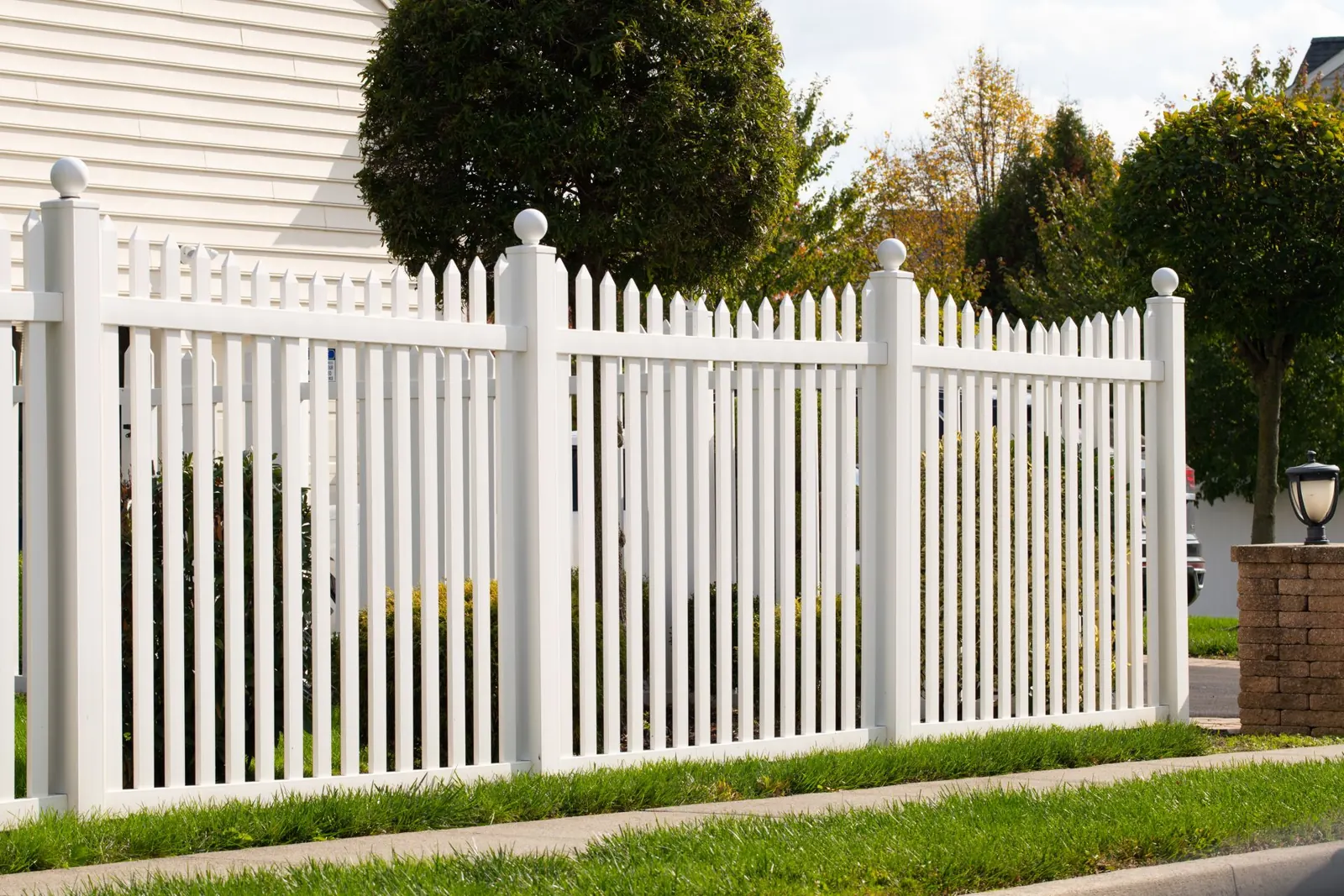
Picket fences define an edge without full privacy
Picket fences have spaced vertical boards or pickets, so they keep an open view. The spacing, height and top profile influence both appearance and whether the fence suits a small pet.
A picket design can work where a solid privacy fence would feel too enclosed. Check front-yard rules and visibility before selecting the height. A white vinyl picket profile and a wood picket fence can have similar layouts but different upkeep needs.
Shadowbox and board-on-board use different board layouts
Shadowbox alternates boards on opposite sides of the rails, while board-on-board overlaps boards to cover seams. These layouts affect angled views and how the fence looks from each side.
Shadowbox can leave sight lines between the boards when viewed at an angle. An overlapping board-on-board design offers more continuous screening. Ask to see the proposed board spacing and overlap instead of treating the names as a guarantee of complete privacy.
Dog-ear and flat-top describe the top profile
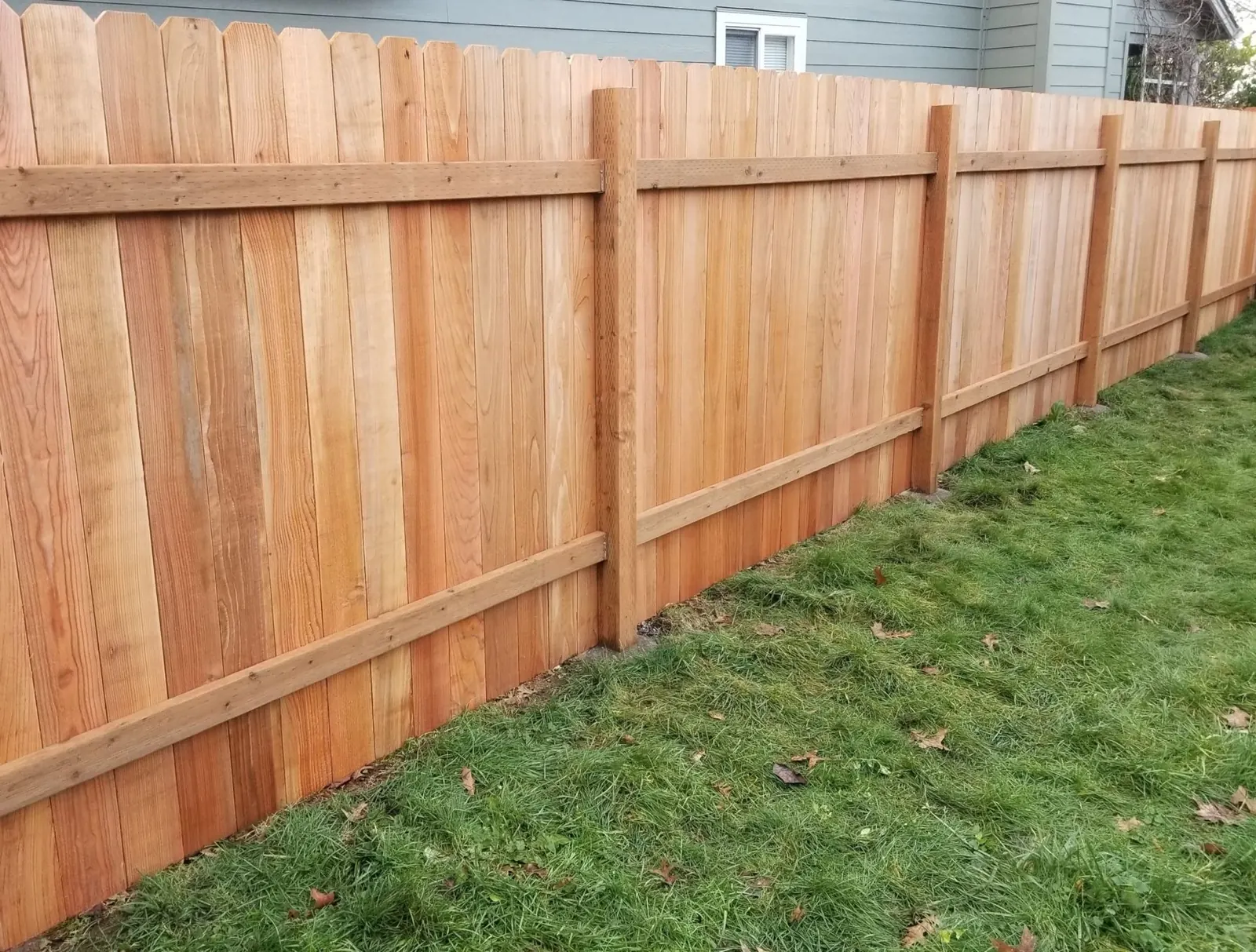
Dog-ear boards have clipped top corners; flat-top boards make a straight upper edge. Either term describes the board top, not necessarily the complete privacy level or structural specification.
For a solid board fence, review how boards meet at the posts, how the top follows sloping ground and whether a cap is included. The example below shows a cedar board fence; use the contractor’s actual drawing or sample to confirm the precise profile you will receive.
Horizontal boards emphasize long, straight lines
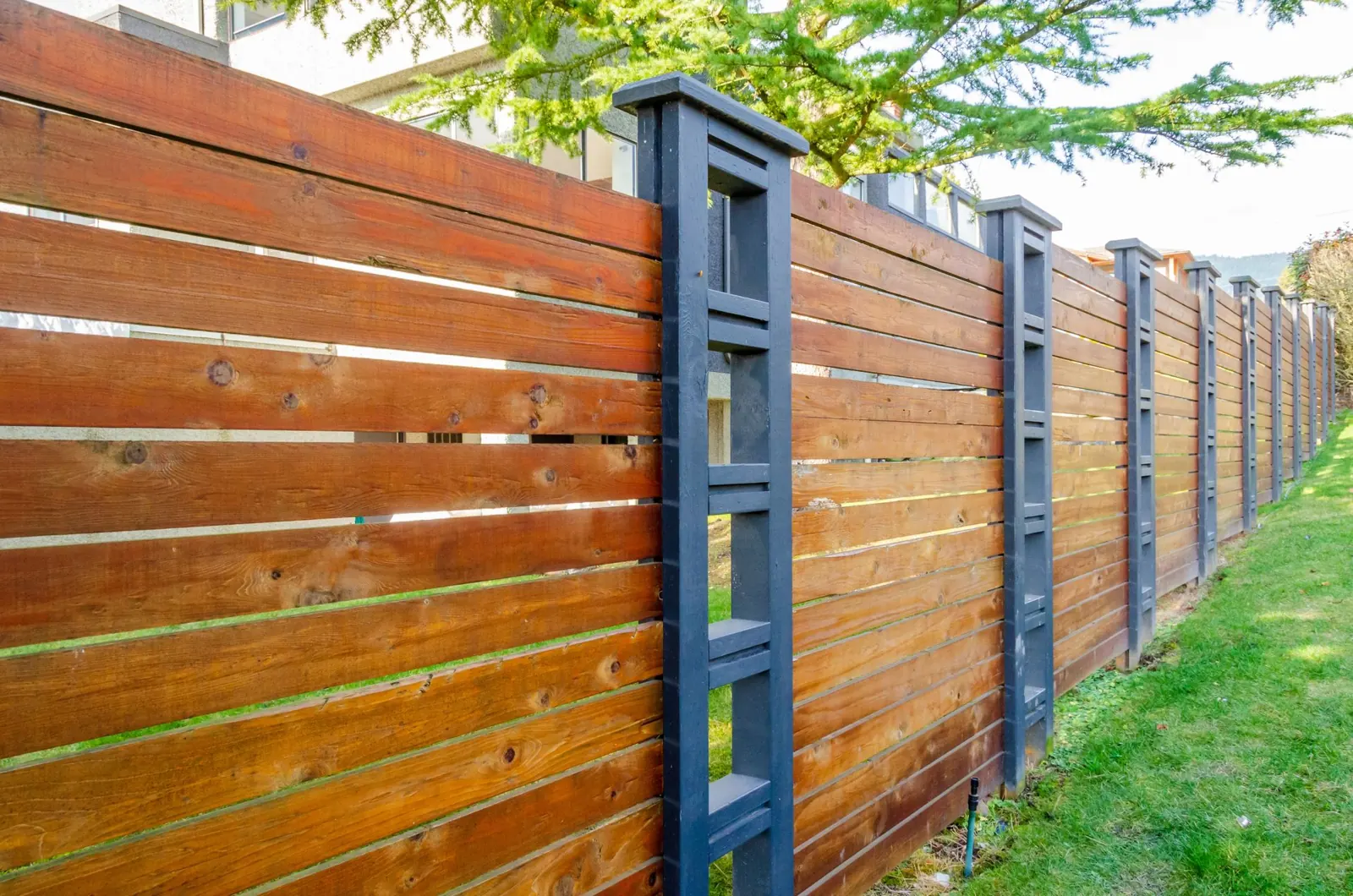
Horizontal fencing places the boards across the posts rather than vertically. Board gaps and the supporting frame determine whether the result is a screen or an open slat fence.
Ask how the layout handles slopes, corners and gates, and how board movement is accommodated. Match a gate’s horizontal pattern to the fence only after reviewing its frame and support; appearance should not replace a workable gate design.
Ranch rail and split rail keep the view open
Ranch rail uses open runs of rails between posts, while split rail has a more rustic rail form. Neither is a privacy fence, and open rail spacing should not be assumed to contain every animal.
The pasture example shows a wood ranch-rail style. If you need a livestock or dog boundary, discuss the animal and any suitable infill separately. Rail count, openings, gate design and the ground line all affect how the fence can be used.

Confirm the style in the written estimate
Name the style, height, material, spacing and gate details in the scope. A general description such as “wood fence” leaves too much room for different designs.
Check the city and HOA requirements before ordering a preferred look. Compare upkeep and repair options alongside appearance, and use example styles to discuss your preferred layout with the contractor.
Keep planning your fence
Review the material options and local requirements before choosing the final layout.
Ready to plan your fence?
Request a free on-site estimate or call (256) 406-2568.