
Fence planning resource
Best Fence for Dogs: Planning a Secure Gadsden Yard
The right dog fence starts with your dog’s behavior, not just a material choice. Check the bottom edge, openings and gates as carefully as the fence height.
Match the boundary to the dog’s escape habits
A digger, a jumper and a small dog create different weak points. Watch how your dog behaves at the current boundary and tell the contractor what needs to change.
- Diggers: discuss a suitable bottom-edge or dig-resistant detail; keep water drainage in mind.
- Jumpers and climbers: review usable height, climbable surfaces and objects that could act as steps near the fence.
- Small dogs: compare the actual clear openings between pickets, beneath gates and where the fence crosses uneven ground.
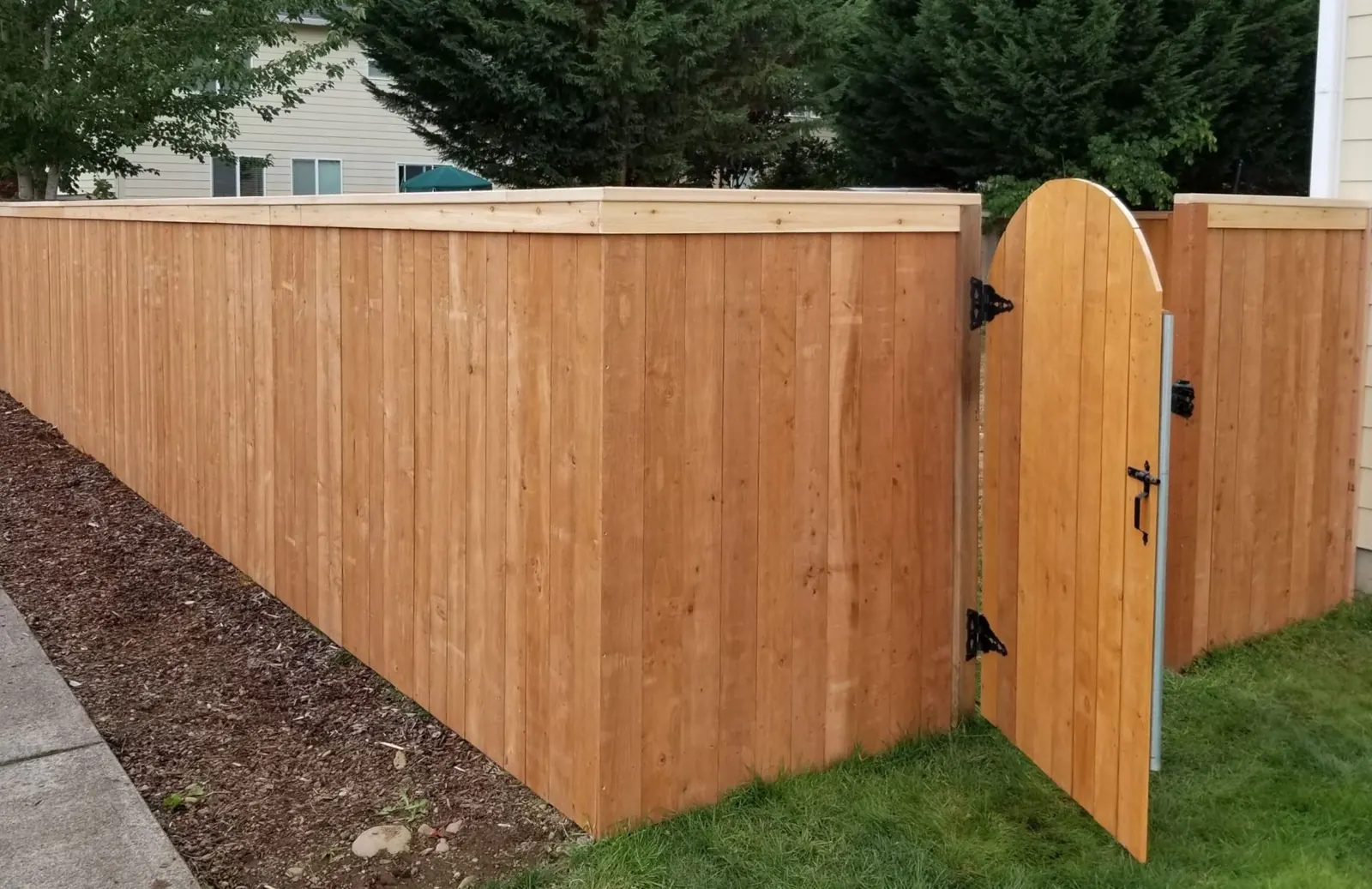
Choose height around behavior and local rules
A taller fence may help with jumping, but height alone does not guarantee containment. Climbable rails, nearby furniture and a rising ground level can reduce the effective boundary.
Have the contractor assess the dog’s behavior and the layout, then confirm the permitted height for your address. Gadsden front-yard and district rules can limit the available design. Keep climbable items away from the fence and supervise a dog that has a history of escaping.
Inspect bottom gaps and openings across the whole yard
An opening that looks small from the patio may still be an escape route. Check gaps at changes in grade, fence corners and gate hinges as well as the straight fence runs.
Picket spacing and the gap below a gate should suit the dog’s size, including a growing puppy. On a slope, discuss whether the design follows the ground or steps down in sections. Do not close a drainage path without checking how water will leave the yard.
Treat every gate as part of the containment plan
A secure fence needs gates that close and latch reliably. Decide how people, lawn equipment and vehicles will enter without leaving an easy escape opening.
Ask about self-closing or self-latching hardware where appropriate, latch placement and a way to secure a double gate’s inactive leaf. Inspect hinge gaps and the space below the gate after installation. Gates should stay usable as the ground or hardware settles; ask how adjustments are handled.
Invisible fences are not a physical barrier
An invisible fence does not keep other animals or people out of the yard. It also depends on a dog’s training and response to the system; it should not be treated as equivalent to a physical enclosure.
A dog may cross a boundary despite the signal, and equipment needs ongoing attention. Discuss behavior, welfare and suitability with a qualified trainer or veterinarian. Where separation from traffic, roaming animals or visitors is important, compare a physical fence and supervised outdoor time.
Check the finished yard before relying on it
Walk the entire fence line and test every gate before giving the dog access. Look from the dog’s level for gaps, sharp edges and reachable latches.
Keep checking the boundary after storms, digging or yard work. A fence reduces some risks but does not replace supervision, and a material label cannot guarantee that a determined dog will stay contained.
Keep planning your fence
Review the material options and local requirements before choosing the final layout.
Ready to plan your fence?
Request a free on-site estimate or call (256) 406-2568.